The First-Year Crack Diary: A Measured Way to Read Movement in New Work
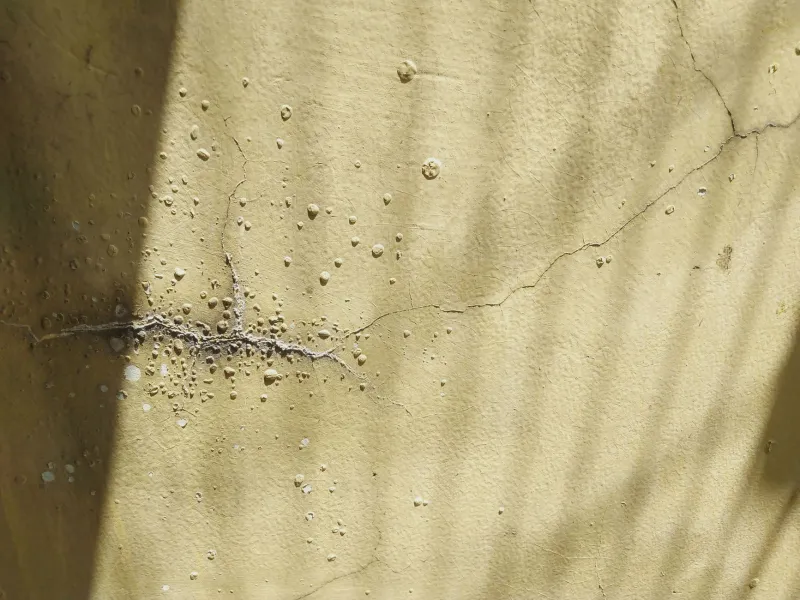
A newly completed room has a particular kind of stillness. The walls are unmarked, the joinery is tight and the junctions are clean. It is therefore understandable that the first hairline crack, often no wider than a human hair, can feel like a failure. In most cases it is not. The first year of a renovated or extended home is a period of adjustment, as materials respond to heating, humidity and the ordinary life of a building. The useful question is not whether movement will occur, but whether it is behaving as expected.
Why the First Year Is a Period of Adjustment
Plaster, plasterboard, timber, mortar and sealant all contain moisture when they are installed. As that moisture disperses, and as the building moves through its first heating season, small changes in dimension are normal. Central heating lowers indoor humidity; timber shrinks slightly; gypsum plaster and filler can contract; new masonry may settle under its own weight. An extension also introduces a junction between new and old construction, where two elements with different ages and movement patterns meet.
This does not mean every crack should be dismissed. It means the first year should be treated as a monitoring period, not a guessing game. A crack that appears, stabilises and remains hairline is a different matter from one that widens week by week. The difference is best established through records rather than memory.
The Cracks That Usually Belong to Settling
Many first-year cracks are cosmetic. Typical examples include fine lines along plasterboard joints, short cracks at the corners of door or window openings, hairline separation where a ceiling meets a wall, and small splits in decorator's caulk at skirting or architrave. Joinery may show slight shrinkage at mitres or between stiles and rails as indoor humidity falls. These are often stable and can be addressed at the next decoration cycle.
Seasonal behaviour is also informative. A crack that opens during the first winter heating season and partially closes in more humid spring weather is likely to be responding to moisture movement. That does not make it attractive, but it is usually less concerning than a crack that continues to lengthen or widen regardless of conditions. Width alone is not a diagnosis; change over time is the more reliable signal.
The Patterns That Deserve a Second Look
Some cracks merit prompt advice. These include stepped cracks in brickwork, diagonal cracks running from the corners of openings in masonry, horizontal cracks in a wall, and cracks that coincide with doors or windows becoming difficult to close. A crack that admits daylight, displaces one side of the wall relative to the other, or appears alongside damp staining should not be filled and forgotten. The same applies to movement at the junction between an extension and the original house if the gap is widening or the two elements appear to be separating.
Cracks in structural elements, such as lintels, beams or load-bearing walls, should be assessed by a suitably qualified professional. For a recently completed extension, the contractor and, where relevant, building control should be told. It is reasonable to ask for an inspection; it is not reasonable to rely on filler as a first response.
How to Keep a Crack Diary
A simple record is more useful than a series of anxious photographs taken at different distances. Choose a small number of representative cracks and monitor them consistently. Photograph each one from the same position, include a ruler or a coin for scale, and note the date. A crack gauge or set of feeler gauges can provide a more precise width reading, but a ruler and a dated photograph are a reasonable start.
Record the location, orientation and approximate length of each crack, together with whether the edges are flush or one side stands proud. Note the indoor conditions where possible: whether the heating has recently been switched on, whether the room is unusually dry or humid, and whether any nearby building work has taken place. Check weekly for the first month after discovery, then monthly if the crack appears stable. A sketch plan of the room, marked with the crack positions, helps a professional understand the pattern at a glance.
Do not fill or paint over a crack while it is being monitored. A filled crack hides the evidence that a contractor or engineer may need. Low-tack tape and a pencil label can mark the ends unobtrusively without damaging the finish.
Reading Seasonal Movement
The first heating season is often the most revealing. As warm air circulates, indoor humidity can fall sharply, and timber and plaster respond. Cracks that appear in late autumn or winter should be reviewed again in spring before conclusions are drawn. A hygrometer is inexpensive and can be useful in a room where movement is being monitored. The aim is not to create a laboratory, but to distinguish a seasonal pattern from a progressive one.
When to Call a Professional
If a crack widens by more than a couple of millimetres over a few weeks, exceeds roughly five millimetres at any point, or is clearly active, seek advice. The same applies if cracks are accompanied by sticking doors, sloping floors, bulging walls or water ingress. For plaster and joinery, the original contractor may be the right first contact. For masonry, structural movement or an extension junction, a structural engineer is usually more appropriate. For an extension still within its approval process, building control should be kept informed.
What to Have Ready Before the Call
A professional can work much faster with a dated record than with a vague recollection. Have the photographs, measurements, sketch plan and a short list of the works carried out. Include the date of completion, the materials used at the affected junction, and any relevant handover or warranty documents. Explain what has changed and when. This is not bureaucracy; it is the difference between a useful inspection and a speculative one.
A smooth finish is not one that never moves. It is one that is understood, monitored and maintained with judgement. In the first year after a renovation, a little patience and a dated photograph are often more valuable than an immediate tube of filler.