Why the Smoothest Renovations Are Run, Not Just Finished

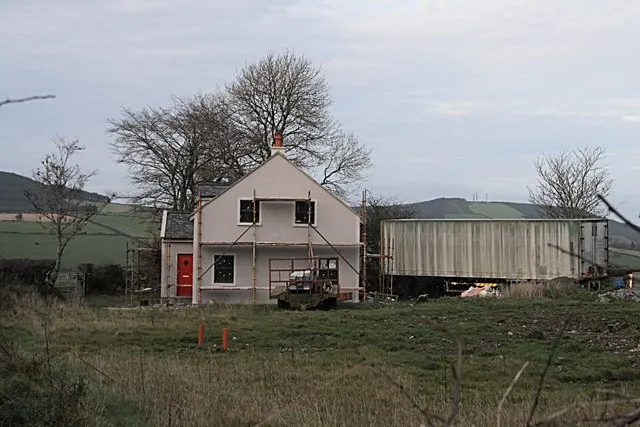
Photo: Kate Jewell, CC BY-SA 2.0, via Wikimedia Commons
The name Smooth Finish Construction makes a visible promise. It suggests plaster, paint and the satisfying line where a wall meets a ceiling. That is understandable. Homeowners notice surfaces because surfaces are what they live with. But a genuinely smooth renovation is rarely achieved by the plasterer alone. It is the cumulative result of decisions taken weeks earlier, often by people whose work is invisible once the project is complete.
That is the argument worth making plainly: smooth finish is a management skill, not just a plastering one. The best surface in the world will not save a project that has been sequenced badly, communicated poorly or handed over without a proper snagging process. Conversely, a well-run project gives the finishing trades the conditions they need to do their best work.
A smooth wall is the last link in a long chain
In a domestic refurbishment, the finished wall carries the evidence of everything that happened before it. First-fix electrics must be in the right place. Back boxes must be set to the correct depth. Pipework must be protected and tested. Insulation must be continuous. Plasterboard must be fixed neatly and joints treated properly. The plaster must be given time to dry before decoration. If any of those steps is rushed, the surface may look acceptable for a few weeks and then reveal its history through cracks, shadows or uneven paint.
This is why the brand name should be read as a standard rather than a single trade. A smooth finish is what happens when the work behind the finish has been coordinated. It is a management outcome before it is a manual one.
Sequencing trades is the discipline homeowners rarely see
Consider a typical Victorian terrace refurbishment. The electrician needs to lift floors and chase walls before plastering. The plumber needs to route supplies and wastes before the bathroom is tiled. The kitchen supplier needs confirmed service positions before units are ordered. The screed needs time to dry before flooring is laid. The decorator needs a stable, dust-free environment after the messy trades have finished.
Now consider a rear extension. The programme must move from foundations and drainage to structure, roof, glazing and weathertightness before internal works can begin. Building control inspections need access at the right stages. Deliveries need somewhere to land. The sequence is not a bureaucratic diagram; it is the difference between a smooth handover and a series of expensive returns.
A project manager who understands sequencing does not simply ask whether a trade is available. They ask whether the site is ready for that trade, whether the preceding work has been inspected, and whether the following trade will be delayed if something slips. That is a different level of attention, and it is one of the clearest indicators of whether a renovation will feel controlled or chaotic.
Float is a buffer, not inefficiency
Homeowners sometimes view quiet days on site as evidence of a slow contractor. In reality, a well-built programme needs float. Drying times, inspection notice periods, delivery windows and weather all introduce uncertainty. An extension that is waiting for glazing is not necessarily behind schedule; it may be using a planned buffer to protect the later stages.
Management discipline means protecting that float rather than spending it in the first fortnight. If every trade is stacked tightly against the next with no allowance for the unexpected, the first delay cascades through the whole project. The finishing trades then arrive under pressure, and pressure is rarely compatible with a high standard of finish.
This matters for property value as well as for daily sanity. A renovation that runs late and over budget often does so because decisions were deferred, changes were absorbed informally, or trades were asked to work over unfinished work. The visible result may be a room that looks handsome in photographs, but the underlying value is undermined by rushed detailing and unresolved defects.
Snagging is a process, not a final walk
A smooth finish is also a matter of how defects are managed. On a well-run project, snagging is not left to a single walkthrough at the end. Key stages are checked as they complete: first-fix positions before plaster, plaster before decoration, tiling before grouting, joinery before painting. Small issues are recorded and closed out while the relevant trade is still on site.
This approach is not adversarial. It is simply more efficient. A snag list that is compiled early can be tracked, allocated and verified. A snag list that appears only at handover often becomes a negotiation about who is responsible and when they can return. The difference is management, not workmanship alone.
Early communication prevents late repair
Renovations are full of small unknowns: a hidden lintel, an unexpected pipe, a neighbour's party wall query, a delayed appliance. The projects that stay smooth are not the ones with no surprises. They are the ones where surprises are reported early, priced transparently and resolved before they affect three other trades.
That requires a communication rhythm. A weekly site meeting, a written update, a clear point of contact and a change-control process may sound administrative, but they are the mechanisms that protect the finish. When a homeowner changes a socket position after plastering, the cost is not just the electrician's return visit. It is the making good, the decorating and the disruption. Early communication is almost always cheaper than late correction.
What homeowners should look for
When comparing contractors, it is tempting to focus on the visible: photographs of completed rooms, the quality of a showroom, or the confidence of a sales conversation. Those things matter, but they are not sufficient. Ask how the contractor sequences trades, who manages the programme, how changes are priced, how delays are notified and how snagging is tracked.
Ask what happens when a delivery slips or an inspection fails. Ask who protects the floors and who cleans the site. Ask how the finishing trades are given time to work. The answers will reveal whether the contractor is selling a finish or managing a process.
Smooth Finish Construction uses its name as a daily reminder that the visible result depends on invisible discipline. A polished renovation is not simply one that looks good on the day the client moves back in. It is one that has been run with enough care to stay good after the furniture arrives, the heating comes on and the first winter passes.