The Room Is the Judge: Settling Finishes Under Real Light

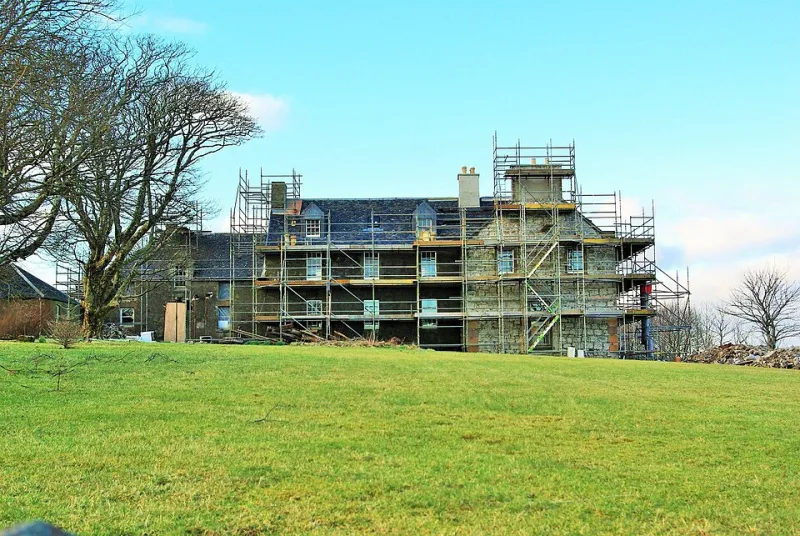
Photo: Dnalor 01, CC BY-SA 3.0, via Wikimedia Commons
A finish selected on a phone screen or beneath showroom spotlights is not yet a decision. It is a proposal. Paint, tile, timber and worktop materials are judged finally against the light, scale and adjoining surfaces of the room itself. For UK homeowners planning renovation work, the sample board test is one of the cheapest exercises available and one of the most useful. Once tiles are fixed, a worktop is templated or a full wall has been painted, reversing the choice becomes costly and disruptive.
Why Screens and Showrooms Distort the Decision
Screens emit light; rooms reflect it. Device brightness, colour profiles and the white balance of a photograph all alter how a finish appears. A paint that reads as a warm grey online may turn distinctly blue in a north-facing room. A tile photographed against a white background can look crisp and neutral until it sits beside existing sanitaryware with a cream undertone.
Showrooms have their own limitations. They tend to use high-output lighting, neutral display backgrounds and isolated products. That environment helps a material stand out, but it does not reproduce the home. In a real room, the finish will be seen beside existing flooring, adjoining joinery, window reveals and the colour of the sky on an ordinary November afternoon. Tile displays often show a single piece, whereas a full wall introduces grout lines, repetition and shadow. A worktop sample may be postcard-sized, while a full slab carries veining and tone across a much larger area. Timber samples can also be misleading if the finish is still maturing or if the grain direction differs from the intended installation.
Building a Sample Board That Belongs to the Room
The purpose of a sample board is not to create a beautiful mood board. It is to place candidate materials in the conditions where they will be judged. Where possible, use actual materials rather than printed representations.
For paint, apply two coats over a primed A3 or A4 sheet of lining paper and fix it to the wall at eye level. Small colour chips are useful for shortlisting but too small for a final decision. For tile, obtain a full tile or a substantial offcut, together with a sample of the intended grout. Grout can change the perceived colour of the whole field, particularly with narrow joints or light tiles. For timber, use an offcut carrying the intended finish and view it in the same orientation as the final floor or joinery. For worktop, request a sample of reasonable size and, if possible, view a slab or larger section before committing. Include samples of any metals, trims or handles that will sit nearby.
Label each sample with its name and product code. Then add two further references: a piece of the existing flooring and, where relevant, an offcut or colour reference for adjoining joinery. These adjacencies matter because colour is relational. A white tile can appear cream beside bright white sanitaryware; a grey worktop can appear brown beside a cool-toned cabinet. The sample board should reveal those relationships before they become permanent.
Reading the Board Through the Day
A finish should be observed at several times of day. Morning, midday and late afternoon each reveal different qualities. North-facing rooms tend to receive cooler, more stable light, which can subdue warm tones and strengthen blue or grey undertones. South-facing rooms are warmer and more variable, with strong changes between seasons. East- and west-facing rooms can shift dramatically between morning and evening.
In November 2026, daylight is limited and often overcast. That makes artificial lighting especially important to assess. Note whether the room will be used mainly in the morning, during working hours or in the evening. A paint that looks balanced at noon may become heavy under warm 2700K lamps, while a cooler 4000K source can make a timber floor appear less golden. Observe the board under the light fittings that will actually be installed, not only under a temporary work lamp.
Record what changes. If a sample only works in one narrow set of conditions, it is probably not the right choice for a room used across the day. The aim is not to find a finish that never changes, but to understand how it changes and whether those changes are acceptable.
The Adjacencies That Change a Shade
Finish selection is often treated as a series of independent choices: a wall colour, a floor, a worktop, a tile. In practice, each material is seen in company. Existing flooring is one of the most influential references because it usually remains. A warm oak floor will pull warmth from a grey wall; a cool grey laminate will make a cream cabinet look more yellow. Adjoining joinery has a similar effect. Painted white woodwork, natural oak doors and dark stained furniture all alter how a neighbouring colour reads.
Worktops and splashbacks should be tested together rather than separately. A cool quartz surface can make a warm-toned tile appear muddy, while a busy stone may overwhelm a quiet paint. Metals matter too: brass, chrome, blackened steel and brushed nickel introduce their own temperature and reflectivity. Even grout and sealant can change the reading of a tile field. The sample board should hold these relationships in one view.
A Simple Decision Record
A short written record prevents the same discussion from being repeated and helps explain decisions to a contractor or partner. For each review session, note the date, time, weather, room orientation, lighting conditions, sample position and the observation made. Photograph the board in consistent conditions, but do not rely on the photograph for final judgement; it is a memory aid, not a colour reference.
Keep two or three finalists on the board rather than a large array. Too many samples encourage comparison fatigue and obscure the practical differences. A week of viewing is usually enough to expose the main changes in daylight and artificial light. If a finish performs consistently and remains agreeable beside the existing floor and joinery, it is ready for a decision.
When to Stop Testing and Commit
A sample board is a tool, not an indefinite project. Once two finalists perform similarly across the day, choose between them on practical grounds: maintenance, availability, lead time, budget and the suitability of the finish for the room's use. A busy family bathroom may call for a different sheen or tile finish than a little-used guest room, regardless of which sample looks marginally better at four o'clock.
The cheapest moment to reject a finish is before it is ordered. The sample board test costs little more than time and a few offcuts, yet it prevents the most expensive kind of correction: removing and replacing a material that was never suited to the room. The room, not the screen or the showroom, should have the final word.